
JournalPhotography10 min

Sometimes a photographer looks at the screen and thinks: in life this person was alive, and in the frame they came out as though brought in for a security pass. The smile has frozen, the shoulders have risen, the arms have stuck to the body. The easiest conclusion is that the person “can’t pose”.

But the camera changes the situation itself. While we are simply talking, attention is directed outwards: at the other person, the subject, what is going on around. In front of a lens it turns inwards. A person starts monitoring their face, their chin, their stomach, their hands, and simultaneously trying to guess whether the photographer is satisfied. The body comes under internal surveillance and loses its usual freedom.
Silence behind the camera strengthens the effect. The photographer sees the frame and knows what they are waiting for. The person in front of them sees only a large black object and a pause. Every second without feedback sounds like possible disapproval.
There is also a feedback loop running from body to emotion. Raised shoulders and held breath do not merely show anxiety, they sustain it. A little warm-up, movement of the shoulder blades, a long exhale or the chance to lean on something changes the inner state before the face does. A photographer is not obliged to explain physiology on set. It is enough to let the person walk about, shake out their hands, or settle so that their weight really rests on something. The expression grows calmer not because of an acting instruction but because the body has become safer.

So work with a subject does not begin with poses. It matters to explain what is happening now, how long the test will take, where they can look, whether they may move. A simple action works better than an abstract “be more natural”: walk to the window, sit more comfortably, tell a story, find something with your eyes.
Sometimes it helps to lower the camera for a few minutes and go on talking. That is not lost time: the person sees that contact exists for more than the extraction of a photograph. When the lens comes back, it no longer feels like the only interlocutor in the room.
And a photographer should watch themselves too. If they fuss, frown at the screen or sigh with displeasure about the light, the person will almost certainly take it personally. The atmosphere of a shoot travels into a face faster than any instruction.
That does not mean every shoot has to become a therapy session. It is enough to make the situation predictable and human. The first few frames can be announced in advance as a warm-up. There is no obligation to show the bad ones, and it is sometimes useful to show the good ones: the person sees that nothing catastrophic is happening.
Woodenness begins before the first pose
Woodenness begins before the first pose. A person enters a space and quickly reads the balance of power: where the photographer is, where the light points, who else is watching, whether they may step aside, what will happen to the pictures. If nothing has been explained, the brain fills the gaps with the most alarming version. Silence means displeasure, a pause means a mistake, a glance at the screen means bad looks. The photographer may be busy with settings and have no idea what film is already running in the subject’s head.
The body reacts to uncertainty in an entirely physical way. Breathing becomes shallow, the shoulders rise, the knees lock, the fingers look for each other. After that the face really does look less alive, but asking separately for “some emotion” is pointless. A long exhale, a few steps, a shift of weight, the chance to sit or lean change the state from the bottom up. Sometimes the best piece of direction sounds prosaic: “Settle in so that you are actually comfortable.”
Conversation only works if the photographer listens. People recognise perfunctory questions asked for the sake of a facial expression very quickly. It is far better to catch on to a real detail: an object in the room, the journey here, the work, the story of a thing. When the answer interests both of you, attention goes outwards. The camera stays nearby but stops being the only reason for the meeting. That is the moment when the expression appears that cannot be produced by the command “smile naturally”.

The tempo is set by trust, not by the camera
The tempo has to match the person. Some are helped by a fast series of tasks: walk, turn, pick up the jacket, walk again. Others need a pause between changes, or they feel like a conveyor belt. It is easy for a photographer to mistake their own working rhythm for a universal one. But the atmosphere of a shoot is built around the speed of trust, not the speed of the camera. It differs from person to person, and arguing with it is pointless.
A direct look into the lens is not a neutral position. In effect the person is asked to look at a single point behind which the photographer, the future audience and their own fear of judgement are hidden. You can begin with softer contact: a look beside the camera, a profile, a reflection, movement, closed eyes. Once the presence of the lens has stopped being a threat, the direct look becomes a choice and sounds far stronger.
Showing the screen should follow reactions, not a schedule. A confident frame can take the anxiety away: the person sees that they look recognisable and dignified. But endless reviewing turns a shoot into quality control of one’s own appearance. The subject starts reproducing a single approved smile and the photographer starts servicing their fear. Sometimes it is better to show one frame, discuss not the shortcomings of the face but the general mood, and go back to real contact.
The language of feedback
The language of feedback matters a great deal. “No, not like that” leaves a person with the sense of a mistake and no way to correct it. “I want less formality, let’s walk and talk” changes the task. Better still is to note what is already working: “There, the shoulders have loosened, let’s keep that.” Concrete information reduces guesswork. Whereas a stream of delight unconnected to anything quickly loses value and starts to sound like a sedative.
Photographic equipment creates a psychology too. A huge lens close to the face, a bright flash, a team of assistants and a monitor with onlookers all intensify the sense of being on display. Sometimes that is unavoidable, but you can change the distance, remove unnecessary people, show the burst of light in advance, let the person see the set. Technical convenience is not always more important than a feeling of safety. A small rearrangement can save half an hour of fighting a tight expression.
Not every reserve needs correcting
Not every reserve needs correcting. Some people do not smile widely, do not gesture and do not want a portrait to become a confession. Their calm closedness can be exact and beautiful. The demand to “open up” sometimes means only that the photographer wants their usual emotional product. Respect begins with the ability to leave a person their boundaries and still see the nuances inside them.

Trust does not end when the shoot does. Selection, retouching and publication decide whether the promises held. If a person asked for one particular frame not to be used, arguing with them for the sake of authorial pride is the short road to destroying everything built on set. Agreed boundaries do not hinder art; they create the space in which a next shoot is possible at all.
So “photogenic quality”1 often turns out to describe a relationship rather than a face. The same person looks different with different photographers because they breathe, move and allow themselves to be seen differently. A camera does not record only appearance. It records the conditions of the meeting. If a wooden figure has appeared in the frame, it is more useful to ask not what is wrong with them but what situation we built around a living person.
Sometimes the source of the stiffness stands behind the camera
Sometimes the source of the stiffness is not in front of the camera but behind it. The photographer picks a long lens2, moves far away and starts directing with loud short commands. Technically everything is convenient; psychologically the meeting has turned into remote control. In another situation a camera that is too close intrudes on personal space. There is no single correct distance, but the body’s reaction can be read: the person retreats, closes their torso, stops breathing freely. Changing the lens or the position sometimes helps more than a new pose.
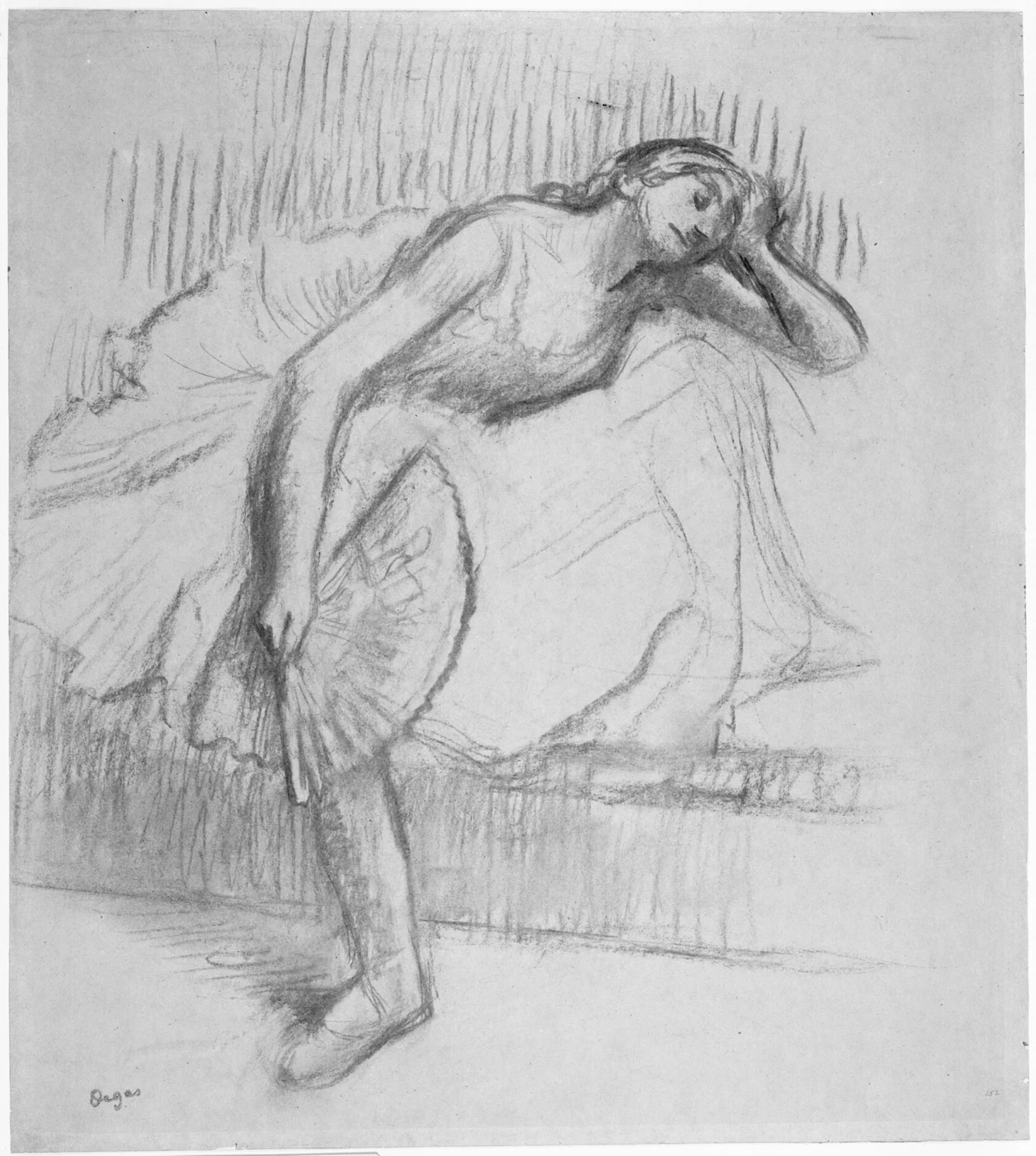
It also helps to tell tension apart from stillness. A person can stand perfectly calmly and stay alive if their attention is directed anywhere other than self-monitoring. And conversely, walking energetically on command can be just as wooden, only with the coat flying. It is not the amount of movement that matters but the presence of a reason. When someone is genuinely listening, remembering, choosing or waiting, even a minimal gesture acquires an inner continuation. Without a reason, movement stays gymnastics for the camera.
What this changes in the edit
It shows in the edit too. The sharpest and technically cleanest frame often falls at the moment of maximum control, while the one next to it, slightly less perfect, preserves the transition between expressions. It is not worth choosing on a single criterion. Sometimes a barely visible blur, a half-open palm or a gaze that has not yet reached its assigned point gives the body its time back — and the person stops looking like a neatly arranged figure.

Woodenness is rarely a property of the subject. More often it is the visible form of uncertainty. The less a person has to guess what is wanted of them and how they are being judged, the sooner the one you met before the camera comes back into the frame.
Notes
- 1The word appeared in the nineteenth century and meant literally “fitness for being photographed” — the ability of a face to survive a long exposure and hard optics. It became a property of appearance later, in the language of magazines. ↑
- 285, 135 or 200 mm on full frame. Such lenses render a face more softly and blur the background beautifully, but they force the photographer several metres back — and the whole situation of communication changes along with the framing. ↑