
JournalPhotography13 min

Window light is often recommended to beginners as the simplest kind: put a person next to a window and you are done. Technically it really is a convenient source. It is large, comprehensible and usually gives a beautiful transition from light into shadow. But one and the same window can make a scene domestic, anxious, cold or almost theatrical.
Everything changes with distance. Right at the glass the face is lit in detail, the background darkens quickly, and the person seems to step out towards the viewer. A few paces away the light becomes weaker and more even, and the room starts to play a larger part. The subject is no longer presented separately — they live inside a space.
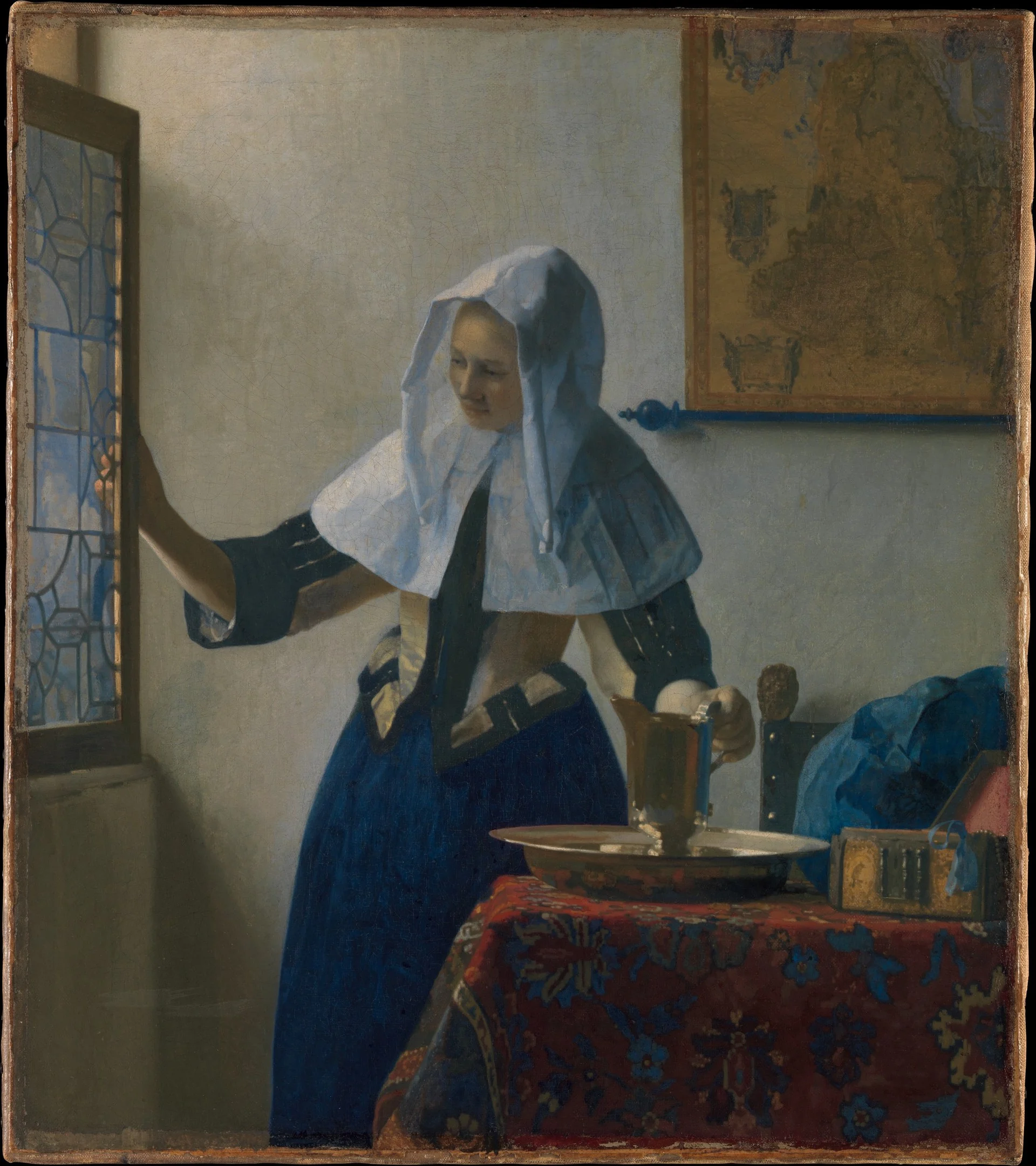
Try four frames without changing the window: facing the light, side-on, back to it, and deep in the room. Then label not the scheme but the feeling of each version, in a single word. That quickly shows that the position relative to the light already contains an emotional choice.
A convenient source does not yet give the scene a reason
Window light is often called the simplest: it is already there, it needs no stand, no modifier, no socket. There is a trap in that simplicity. The moment a person stands by the glass, the photographer begins to treat the window as a free softbox: turning the face, metering the exposure, watching the catchlight in the eyes. All of it is correct, but while we are discussing only the convenience of the source, the scene is left without a reason. One and the same window can make a room a refuge, a cage, a place of waiting, or simply a well-lit corner. Light does not deliver meaning automatically. It only creates the conditions in which meaning becomes visible.
A window always has two sides. On one there is the interior with its own temperature, order and memory; on the other the street, the time of day, the weather, someone else’s life. A person between them is rarely read as neutral. If they look out, we sense a direction of desire or anxiety. If they have turned away from the glass, the outside world becomes a pressure at their back. If the curtain is almost closed, the strip of light can recall the possibility of leaving; a wide-open window, on the contrary, sometimes makes the room emptier still. What works here is not brightness in itself but the subject’s relation to the border.
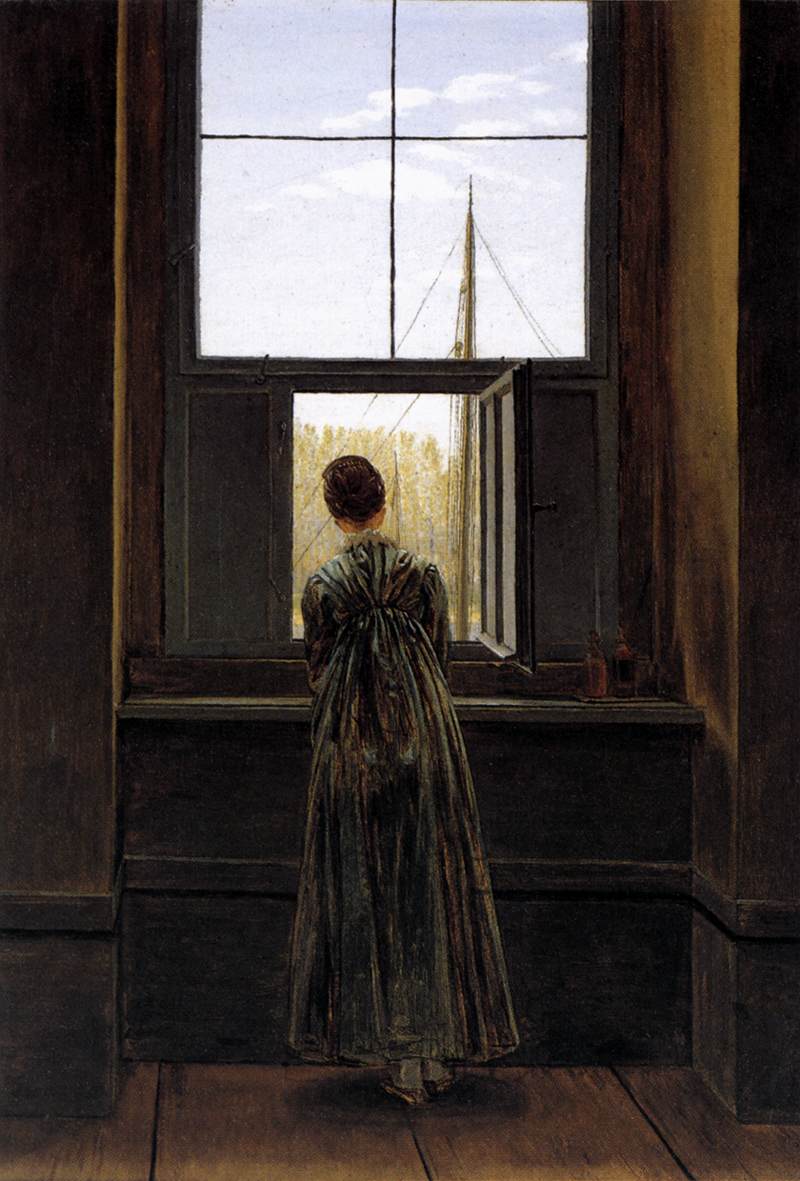
So it helps to begin not with the question “where do I put the model” but with a short sentence about what is happening. The person has only just arrived, is about to leave, is waiting for someone, is hiding from the day, is trying to get warm, is watching the rain. The sentence will never reach a caption, but it filters out accidental decisions. Someone who is waiting holds a different distance from the window than someone who wants to leave. For the first, the pause and the traces of time in the room matter; for the second, the direction of the body and the light that seems to pull them outside.
A window also changes the scale of silence. A studio source exists only for the sake of the shoot, while daylight goes on living independently of the photographer. A cloud passed, the room darkened, the rectangle on the wall shifted, a car in the street threw a brief reflection. Those changes make the person part of time rather than a figure neatly pasted into a ready-made scheme. Sometimes the best frame appears a minute after the light stopped being “ideal” and became truthful for the chosen state.

Direction affects feeling too. If the person is turned to face the window, we see an open, calm face. Side light emphasises volume and can add inner tension. Backlight1 leaves the features in shadow: the viewer first reads the silhouette, the pose and the distance, and only then tries to get acquainted with the person.
The colour outside the window and the colour inside the room hold a conversation as well. Daylight can be colder than lamps, so the face at the glass and the far part of the room end up in different temperature worlds. The camera often amplifies that difference. It can be neutralised, and it can be left: a warm depth will invite you inside, a cold window will separate the subject from home. That is how an ordinary white balance2 turns into a decision about whether the person belongs to the space.
Net curtains and cloud soften more than the quality of the light. Along with the hard shadows, part of the drama disappears. Direct sun, on the contrary, divides the room into rigid zones and makes it possible to hide part of the story literally. A band of light across a face can feel like intimacy, and it can feel like an interrogation. Context decides everything.
Four windows instead of four degrees of softness
The character of a window is easier to understand if you drop the words “soft” and “hard” for a while. A north window, a low winter sun, a white courtyard after snowfall and August greenery behind the glass do not give four degrees of softness but four different worlds. Snow returns light from below and makes a face almost weightless. Foliage tints the half-tones, adding a barely visible green to skin and walls. A low sun cuts the space into long bands. An overcast sky fills the room slowly, with no clear event. Technically all of this can be evened out, but then the weather disappears — and with it half the atmosphere.
The direction of the light also affects the distance between viewer and subject. A face turned to the window opens gradually: the side nearer the glass is clear, the far side goes into half-tone. Shoot from the room’s side and the viewer seems to be observing without intervening. Stand closer to the glass and turn the camera inward, and the light falls almost frontally while the contact becomes more direct. Shooting against the window, a person can turn into a silhouette; we lose the detail of the face but feel the pose, the solitude or the sense of shelter more strongly. One source offers different degrees of acquaintance.
Not every shadow should be opened up
Not every shadow deserves to be opened immediately. A modern camera seduces you with the fact that almost everything can be brought back: the texture of a dark wall, hair, clothing, objects in the depth. But available information is not obliged to become visible. If the room is meant to feel closed, detailed shadows will destroy it. If, on the contrary, the subject is seeking contact, too dense a darkness can turn them into a sign instead of a person. Good exposure here is defined not by a histogram but by how much space we want to hand to the viewer.

Curtain, blind and reflector are the behaviour of the room
Curtains and blinds are also better understood not as light modifiers but as part of the room’s behaviour. Net curtain can diffuse the flow and at the same time add a sense of private life into which the viewer is admitted cautiously. A heavy curtain makes light rare and expensive: a small open patch starts to define the whole frame. Blinds break the face and the wall into stripes, creating a nervous rhythm. If that pattern has nothing to do with the person, it becomes an effect for the sake of an effect. When the subject really is hiding something or is under pressure, the geometry starts working for the state.

A reflector deserves the same deliberate handling. A white surface on the shadow side of a face can restore contact, and it can erase the sense of depth. Sometimes a pale wall, an open book or a sheet is enough — they give a weak, natural return. A silver reflector quickly announces the presence of a crew: the highlight becomes too confident for a quiet room. This is not a prohibition but a question of agreement. In an advertising portrait clarity may matter more than chance; in a story about solitude an over-tidy fill light sounds like somebody else’s line.
The camera often makes a window scene more legible than it felt to the eye: it lifts the shadows, evens out the colour, brings detail back. If the aim was the feeling of a quiet room, there is no obligation to rescue every dark corner. Sometimes it is precisely what is not shown that gives the viewer a sense of presence.
Before moving the person, it is useful to walk the room yourself and see where not only the brightness changes but the mood. One step towards the glass, a turn of the shoulders or a closed curtain give more options than a new piece of equipment.
Colour decides who the person belongs to
Colour at a window is rarely “wrong” in any simple sense. A warm lamp may be burning inside, a cold overcast day lying outside, and both sources falling on the face. Automatic white balance will try to reconcile them and will often remove the most interesting thing. Leave the difference and the room and the street become emotionally different territories. The warmth of the room can shelter you from a cold world. Or, conversely, the yellow lamp will feel stuffy and the blue window the only fresh way out. The meaning is set not by the colour wheel but by what the subject is doing.

In editing it helps to decide first where the viewer should feel air. If closeness matters, you can keep a soft warmth on the skin and let the corners of the room go cooler. If estrangement is needed, the face may be slightly subordinated to the colour of the street, with a small warm trace left in the objects. An even grade makes an image consistent but often impoverishes the space: the sense that different temperatures and different possibilities collide in this room disappears.
A window portrait is worth checking in black and white too, even if the final version stays in colour. Without hues it becomes visible who really governs the frame: the face, the bright opening, the white curtain or the highlight on the table. Then colour can be put back to see whether a second route has appeared. A bright sign behind the glass, green foliage or a warm lamp can pull attention harder than a face. Sometimes it is enough not to darken everything unnecessary but to lower its saturation slightly and keep the sense of a real place.
Morning and evening are different knowledge about the day
There is also the question of time. A morning window is not identical to an evening one even at similar brightness. Morning contains the promise of a day, evening the knowledge that the day has already happened. In an empty room that difference reads through small things: an uncleared cup, clothes on a chair, a lamp switched on, movement in the street. The photographer can support the feeling through the duration of a gesture. In the morning a person more often looks to be on the threshold of action, in the evening inside the consequence. It is not a law of nature, of course, but a useful dramaturgical hint.
Shooting at a window shows well why technically beautiful light does not always become a good photograph. You can get a perfect transition across a cheek, a tidy background and clean colour, and still leave the subject without any relation to the place. And you can allow a blocked-up shadow, a blown-out view through the glass or a harsh strip of sun, and give the viewer a clear feeling: someone here is waiting, hesitating, returning to a conversation or deciding to leave. The second photograph will be remembered not because of the error but because the light turned out to be a verb.
Reconnaissance without a camera
Before a shoot you can run a small reconnaissance without the camera. Spend five minutes by the window and notice what changes: where you naturally want to sit, at what height the light passes, what is reflected in the glass, whether the street is audible, whether you want to open the casement or, on the contrary, draw the curtain. Those bodily reactions are often more accurate than a diagram. If a place makes a person squint, reach for warmth or retreat into the depth, it already contains an action.
And one more thing: the window need not be visible. Sometimes it is enough how the light falls on the wall, how the background gradually dissolves, how the person turns towards a source beyond the edge of the frame. An invisible window leaves the viewer the work of imagination. We are not examining a piece of architecture; we feel the presence of the outside world. That is especially useful when the literal view through the glass explains too much or turns a quiet portrait into a postcard.

The most accurate test stays simple: remove the words “soft”, “beautiful” and “natural” from the conversation and try to name the state of the frame. If there is no answer, the source is still working only as equipment. If an answer appears — “the morning has not yet come into the room”, say, or “the person is already mentally outside” — it becomes clear which shadows to keep, what to show behind the glass and how much warmth to leave on the face. Then the window stops being a ready-made lighting scheme. It becomes the place where the viewer feels the distance between inside and outside.
A window is not a ready-made lighting scheme. It is the border between two spaces. And the photographer decides whether the viewer will feel the warmth of the room, the cold of the street, or the tension between them.
Notes
- 1Light coming from behind the subject towards the camera. The face stays in shadow while a glowing contour appears along the edges of the figure. The viewer reads the silhouette and the pose first and only then tries to make out the features — the introduction is postponed by a second, and that second is expressive in itself. ↑
- 2The setting that tells the camera which shade to treat as white. In a room with a window there are usually two whites: the cold daylight behind the glass and the warm lamplight inside. The camera can agree with only one of them, and the choice between them is not a technical detail but a decision about whose territory the frame belongs to. ↑
- 3The distance between the darkest and the brightest that a camera can still distinguish. At a window the scene is almost always wider than that distance: keeping the view through the glass and the detail of the room at once is physically impossible, and the picture turns out to be a choice rather than a compromise. ↑